A sensor for real-time oral health monitoring
The implications of the technology stretch far beyond dentistry
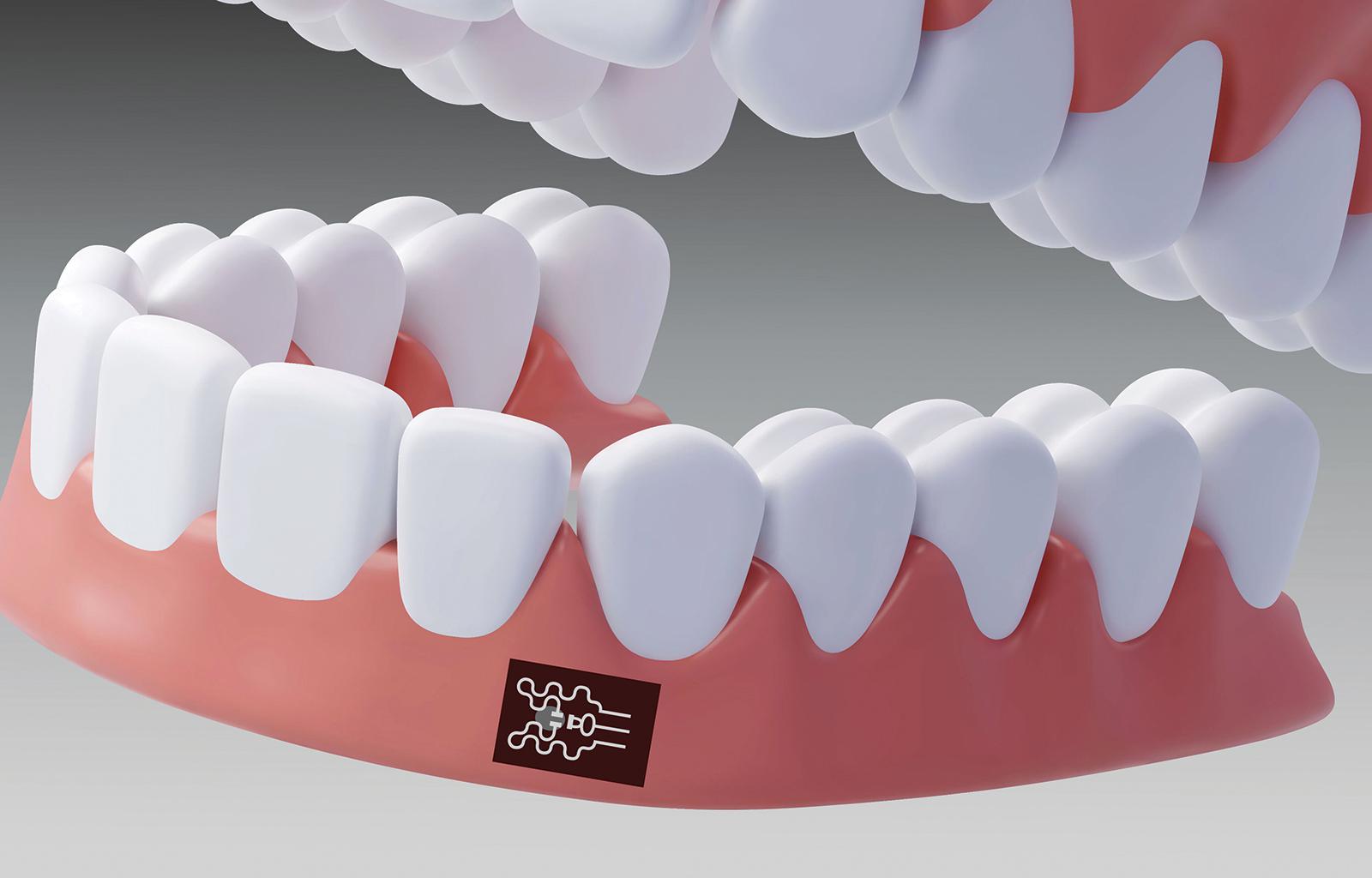
In the high-tech labs of Texas A&M University, a small, translucent patch is promising to do for oral health what the continuous glucose monitor did for diabetes; transform a reactive ‘wait-and-see’ approach into a proactive early-warning system.
For decades, the standard for oral healthcare has been largely visual and retrospective. A patient feels a sharp pain or notices bleeding gums, and by the time they reach a dentist’s chair, the damage, be it advanced periodontal disease or significant tooth loss, is already done.
However, a multi-disciplinary team led by Dr Chenglin Wu, an associate professor in the Department of Civil and Environmental Engineering, is flipping that script with a first-of-its-kind wearable biosensor that monitors the chemistry of the mouth in real-time.
The mouth is one of the harshest environments for wearable technology. It is perpetually wet, subject to constant movement from talking and eating, and teeming with a chaotic soup of bacteria and enzymes. To survive and function here, Dr Wu’s sensor relies on a sophisticated, multi-layer architecture.
At the heart of the device is a sensing layer composed of graphene and MXene. These materials possess an inherent electrical conductivity that is incredibly sensitive to molecular changes. His team functionalised this layer with specific probes designed to bind to a single target; tumour necrosis factor alpha (TNF-⍺), a protein that serves as a universal biomarker for inflammation.
When a TNF-⍺ molecule binds to the probe, it triggers a measurable change in the sensor’s electrical charge. The level of precision is, quite literally, microscopic. The sensor can detect the protein at a concentration of just 18.2 femtograms per millilitre (fg/mL).
“For context, a patient with a viral infection might show symptoms at 10 million or 1 billion virus copies per millilitre,” said Dr Wu. “Our sensor could detect 100 to 150 per millilitre.” To visualise a femtogram, one would need a quadrillion of them (a one followed by fifteen zeros) just to equal a single gram. This level of sensitivity allows the device to catch the very first chemical whispers of an infection days or even weeks before a patient feels a single ache.
A sensor is only as good as its ability to stay in place. Working alongside Dr Shaoting Lin from Michigan State University, the researchers developed a tissue-adhesive hydrogel. This ‘glue’ is designed to create a robust bond with the soft tissues of the mouth, ensuring that the sensor does not drift or peel away during a meal or a conversation.
“Sensing measurements can be significantly influenced by the dynamic movement of tissues,” said Dr Lin. “A more robust tissue bond allows for a more reliable sensing performance independent of the strain.”
But the hydrogel is not just an adhesive; it is a gatekeeper. One of the greatest challenges in biosensing is ‘noise’; the interference caused by other molecules that might trigger a false positive. Dr Lin engineered a selective-permeable hydrogel layer that acts like a microscopic mesh lattice. The openings are so small that they only allow specific, smaller biomarkers to pass through to the graphene-MXene layer, effectively filtering out the biological ‘clutter’ of the mouth.
While the initial focus of the study is oral health, aiming to curb the prevalence of gum disease and tooth loss, the implications of this technology stretch far beyond dentistry. Dr Jeffrey Cirillo, a collaborator on the project, notes that the TNF-⍺ protein is a cytokine involved in almost every soft-tissue infection.
“The goal was to see if this type of system would allow rapid, point-of-care detection,” said Dr Cirillo. Because the materials are versatile, the sensor could theoretically be recalibrated to detect different biomarkers, such as those for viral infections, heart disease or even certain cancers.
The researchers have already successfully tested the non-invasive patch in animal models to prove the concept. The next steps involve clinical trials to refine the device for human use and explore how it might be adapted for other parts of the body.
The ultimate vision is a world where ‘wellness’ is no longer a guessing game; instead of waiting for the symptoms of disease to manifest, a tiny, unnoticeable patch on the gum line could alert a patient and their dentist, or doctor, to the earliest signs of trouble.
Tags: AI, Sensors, technology
