WHO oral health policy launched in Dublin
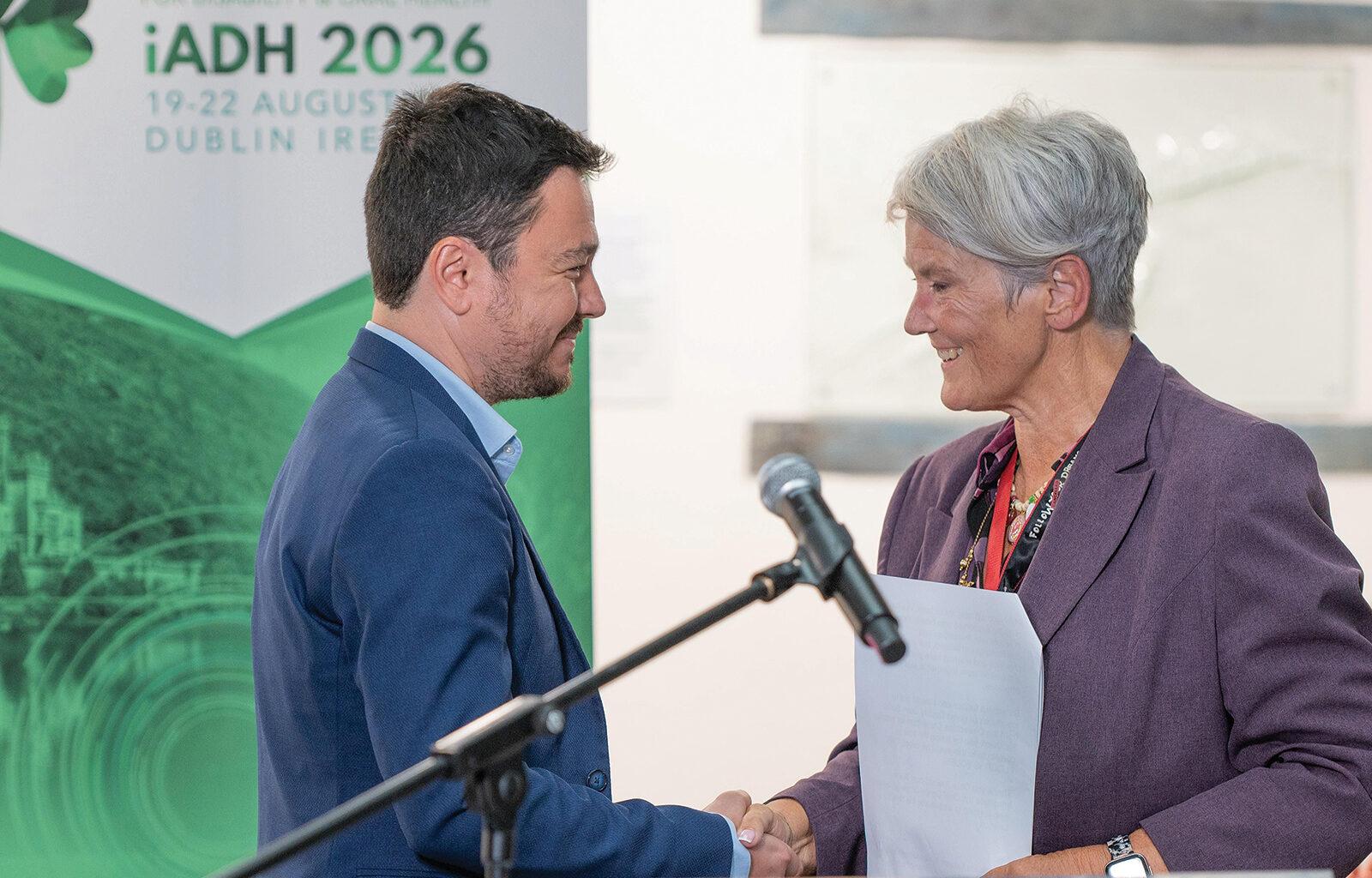
It encourages countries to design health services around the needs of people living with a disability
Dublin Dental University Hospital hosted a reception in August at which the World Health Organization (WHO) launched its new policy, Oral health equity for persons with disabilities.
The event was attended by Professor Alison Dougall, the Dean of Dublin Dental University Hospital and Head of the School of Dental Science, Professor Paul Brady, the Dean of University College Cork Dental School and Hospital, and key stakeholders from the Health Service Executive, the Department of Health – Ireland and the Department of Education and Youth.
More than 1.3 billion people worldwide live with a disability. According to Ireland’s National Disability Authority, 70% of working-age adults with a disability acquired it during their adult life, between the ages of 16 and 65, with 30% affected from birth or childhood.
Currently, in Ireland and abroad, disability means that people must wait longer for oral health services, often only receiving care when preventable problems have developed into emergencies or tooth loss.
People may require an accessible building or specialist equipment, longer appointments, adapted communication, or close cooperation between dentists, carers and other healthcare professionals.
Frequently, general dental practices lack the appropriate training, confidence and resources. Having poor oral health also leads to poorer outcomes in overall health.
Professor Dougall said: “Dental issues represent the most common non-communicable disease in the world, and they are expensive to put right once things go wrong.
“The frustrating part is that the science around prevention has moved beyond all recognition in recent years, like other areas in medicine, but the access and support for people with disabilities remains in the dark ages.”
The new WHO policy aims to addresses these critical shortcomings. It states: “By implementing Global Oral Health Action Plan (GOHAP) actions in a disability-inclusive manner – particularly through equitable service delivery, meaningful engagement of persons with disabilities for health policy and programme development and strengthened oral health information systems – progress can be made towards ensuring the needs of persons with disabilities are recognised and met.
“Achieving the GOHAP’s vision of universal health coverage for oral health by 2030 requires commitment to inclusion, equity, and evidence-based action. Persons with disabilities must be engaged not only as beneficiaries but as active contributors to shaping oral health policies and programs that reflect their rights and needs.”
Speaking at the launch, Dr Kaloyan Kamenov, Disability Lead at the WHO, highlighted how inclusion and equity must be designed into oral health systems and people with disabilities should be active partners, rather than simply recipients of care.
Among the external contributors who helped to draft the policy brief were Finbarr Allen, of University College Cork, and Katrina Byrne and Caoimhin Mac Giolla Phadraig, of Trinity College Dublin.
